
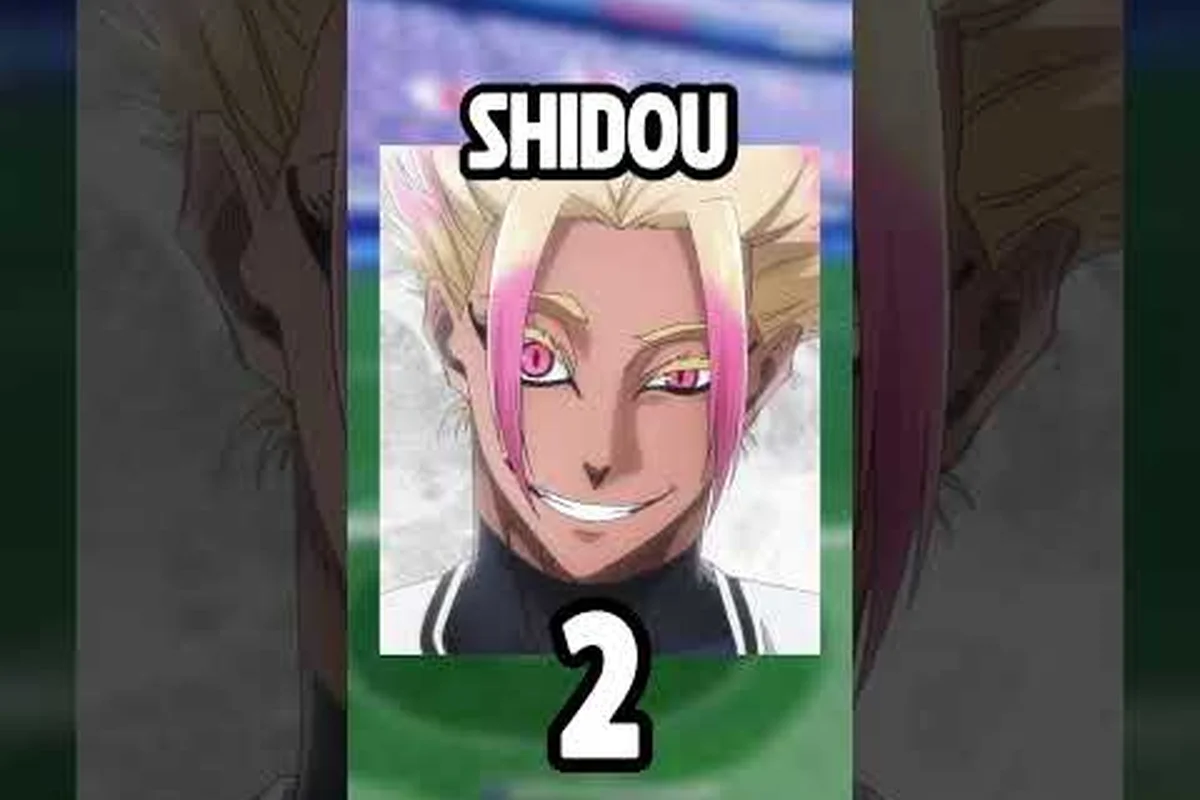
Rarity is not power. In Azure Latch, an Epic Style can outplay a rarer one in the right hands, and the honest way to build an Azure Latch epic styles ranked list is to work from what the game publishes: the rarity bands, the kit shape every Style shares and the Flow values behind the awakening. The Epic band is where most players live, because at a published 8.5% it is far more attainable than the World Class or Mythic pools, while still being rare enough that owning one feels like a result.
This article sorts the four Epic Styles — Shidou Ryusei, Bachira Meguru, Nagi Seishiro and Chigiri Hyoma — against each other and against the bands around them, without inventing a damage number or a win rate to do it. If you want a broader view that includes the other bands, the main Azure Latch tier list handles the full roster, while this article stays focused on the Epic bracket.
How Epic Styles Are Actually Ranked
The Epic band has a fixed membership of four Styles, which makes the comparison unusually clean. Each one carries the same skeleton — five numbered skills, one T special and one Flow awakening — so the question is not which kit is bigger, because the game publishes no size at all. It is which one you can actually obtain, learn and deploy.
The Four Ranking Pillars
| Pillar | What It Measures | Where the Information Comes From |
|---|---|---|
| Rarity band | The published drop band and its rate | The official Style list headers |
| Kit coverage | How many of the five numbered skills answer different situations | The in-game skill list |
| Flow charging | How easily the awakening meter fills | The published Flow gain values |
| Role fit | Whether the kit suits the position you lock in | Position lock during the intermission |
Kit coverage is the biggest filter. A Style whose five numbered skills each solve a different problem will do more across a six-minute match than one whose buttons repeat the same job, and the Striker-focused tier list goes deeper on the attacking side of that question.
Flow charging is the most underrated pillar, and it is the one place the game gives you exact numbers. Tackles and interceptions charge the meter at +12%, successful dribbles at +10%, goals at +15%, and catches, saves and headers at +2%. A kit whose play naturally produces tackles and dribbles will reach its awakening several times a match; a kit waiting on goals will not. That difference is worth more than any band.
Position Weighting
Not every role asks the same amount of a kit. A goalkeeper spends most of the match reacting, so the useful question is whether the T special and the Flow awakening help survive pressure. A midfielder touches every phase, so breadth matters more. This is why any honest Azure Latch goalkeeper tier list subset will look different from an outfield one even when the raw band is identical.
| Role | What the Role Asks of a Kit | Why It Changes the Ranking |
|---|---|---|
| Goalkeeper | Survive sustained pressure and restart play | The awakening has to be useful while defending |
| Defender | Win the ball back repeatedly | Tackles and interceptions charge Flow fastest at +12% |
| Midfielder | Link both ends without the ball | Breadth across the five skills matters most |
| Striker | Convert the chances the team supplies | Scoring is the rarest Flow trigger, at +15% but rarely available |
That weighting is why an Epic can feel invisible in a public lobby and strong in a coordinated one: the same five skills do different amounts of work depending on how much space the team is covering and whether anyone is feeding you the ball. The style ranking breakdown discusses the mode trade in more detail.
The Four Epic Styles
The Epic band holds exactly four Styles, all at a published 8.5% on the official list. That makes this section the most important one in the article, because Epic is the band most players will realistically build around: it is attainable enough to own several kits, but rare enough that the ones you do own are worth learning properly.
Epic Snapshot
| Style | Rarity Band | Band Rate | Documented Development |
|---|---|---|---|
| Shidou Ryusei | Epic | 8.5% | A Legacy version exists as a separate unlock |
| Bachira Meguru | Epic | 8.5% | One of four Styles in the band |
| Nagi Seishiro | Epic | 8.5% | Buffed across the 18.1 to 18.5 stretch; a Legacy version exists |
| Chigiri Hyoma | Epic | 8.5% | Gained the Fast Lane T special with Update 18.5.5 |
What separates these four is not raw power — none of them has a published damage figure — but how much the developer has touched them and how easy they are to learn. Nagi Seishiro is the clearest example of patch history mattering: he received follow-up buffs across the Update 18.1 to 18.5 stretch, so advice written before that window may describe a kit that no longer exists. Chigiri Hyoma is the clearest example of a single addition changing a Style's shape, because the Fast Lane T special arrived with Update 18.5.5 and the T slot is one of only three parts of the kit.
Shidou Ryusei and Bachira Meguru are the two Epics with the least documented recent change, which cuts both ways: their kits are stable, so guides age well, but they also have no newer version to work toward beyond the Legacy route. Shidou in particular has a Legacy version as a separate unlock, so an owner has a second ruleset to explore rather than a second power level.
How the Epic Band Sits Against the Bands Above
The Epic band sits two steps below World Class and one below Mythic on the published list, but that ordering describes drop rates rather than strength. What it actually means in practice is that an Epic owner faces a much shorter grind to get their kit than a Mythic or World Class owner does, and can therefore spend more time practicing.
Band Comparison
| Band | Published Rate | How Many Styles | What the Band Means for You |
|---|---|---|---|
| World Class | 0.4% | 4 | The longest grind; several kits have an extra version documented |
| Mythic | 1.7% | 8 | The largest band, so the most likely "accidental" rare pull |
| Legendary | 4.3% | 1 | A single Style, so comparatively little shared knowledge |
| Epic | 8.5% | 4 | Attainable enough to practice, and each has documented history |
| Common | 85.1% | 2 | The starter pool every account rolls first |
Layered on top of the bands is the second acquisition system: masteries. Mastery Michael Kaiser, Mastery Oliver Aiku, Mastery Don Lorenzo, Yo Hiori and NEL Isagi Yoichi are all unlocked through questlines rather than Style Coins, which means a player can reach an evolved Style without relying on the drop rates at all.
The practical reading of that table is that Epic is the band where a serious but unlucky player lives. It is attainable at 8.5%, it has four distinct kits, and two of them have been touched by recent updates. That is a far better position than owning a single rare Style you cannot find a guide for.
Where the Rest of the Roster Sits
The rest of the roster is not "below" Epic in any power sense — it is simply in other bands with different drop rates. Players searching for an Azure Latch common styles ranked answer usually want to know how the two starters compare with the Epic kits they are saving for, so the table below puts the bands side by side.
Epic vs Common Snapshot
| Band | Styles | Published Rate | What You Are Actually Choosing Between |
|---|---|---|---|
| Epic | Shidou Ryusei, Bachira Meguru, Nagi Seishiro, Chigiri Hyoma | 8.5% | Four kits with documented update history |
| Common | Isagi Yoichi, Gagamaru Gin | 85.1% | The two starters, one of which evolves through the NEL questline |
| Mythic | Eight Styles including Itoshi Sae, Oliver Aiku, Barou Shoei | 1.7% | The biggest band, and the upgrade most Epic owners eventually chase |
The band gap matters less than the practice gap. A Common kit that a player has used for two hundred matches will usually outperform an Epic kit they pulled last week, because the game publishes no shot power or damage to close that difference for them. That is why the meaningful comparison is not Epic versus Common but "how many matches have I played on this kit."
The mastery system is the other route worth remembering. Mastery Michael Kaiser, Mastery Oliver Aiku, Mastery Don Lorenzo, Yo Hiori and NEL Isagi Yoichi are earned through questlines rather than rolls, so a player who wants an evolved Style has a path that does not depend on drop rates at all. The Nell/Isagi pairing article covers what that route looks like when it is finished.
The Common Band and the Starter Pool
The Azure Latch common styles ranked question comes up constantly, and the honest answer starts with the numbers the game actually publishes. The Common band is rated 85.1% and currently names two Styles, Isagi Yoichi and Gagamaru Gin — the two kits most new accounts roll first. There is no published difference in kit depth between the bands: a Common Style has the same five numbered skills, T special and Flow awakening as an Epic one.
What Actually Differs Between Bands
| Factor | Common Band | Epic Band | Is There a Published Difference? |
|---|---|---|---|
| Kit structure | Five skills, T special, Flow awakening | Five skills, T special, Flow awakening | No — the structure is identical |
| Published drop rate | 85.1% | 8.5% | Yes — this is the real difference |
| Documented extra versions | Isagi Yoichi has the NEL quest Style | Nagi and Shidou have Legacy versions | Yes, and both bands have routes |
| Per-Style stats | None published | None published | No — the game releases no stats for either |
That table is the whole answer: the bands separate how lucky you were, not how strong you are. The Flow values apply to every Style equally, so a Common kit that generates tackles and dribbles charges its awakening at the same +12% and +10% as an Epic one.
If you want a broader look at the roster, the style overview page lists the bands together, and it is the cleanest reference when comparing a starter Common with its questline evolution. The key thing to carry away is that the band tells you the drop rate and nothing else, so the choice between a Common and an Epic is really a choice about how much practice you can commit.
MVP, Emote, and Cosmetic-Adjacent Rankings
Azure Latch also runs cosmetic systems that do not affect Style strength but do affect how a match feels. The Azure Latch mvp tier list searches usually want to know which animation plays when you win the post-match award, the Azure Latch emote tier list searches want to know what you can equip, and goalkeeper cosmetics are a smaller subset of the same question.
What the Cosmetic Systems Actually Do
| System | What It Is | Confirmed Details |
|---|---|---|
| MVP Animation | The animation shown when you win the post-match MVP award | A random roll costs 5,000, and VIP unlocks an exclusive animation |
| Emotes | Expressions equipped to slots and used through the emote wheel | Four slots by default, eight with the Extra Emote Slots gamepass |
| Titles | A chat title shown next to your name | Titles cost 10,000 cash |
| Goal Effects | An effect that fires when the ball hits the net | Spread across Mythic, Legendary, Rare and Common grades |
None of these systems has a published link to which Style wins more matches, and any "MVP tier list" that quotes a percentage is inventing it. What is confirmed is the economy around them: MVP animations and emotes are bought with Cash or rolled, titles cost 10,000 Cash, and the gamepass list includes Extra Emote Slots and Extra Emote Pages for players who want more than four slots.
The practical advice is to treat cosmetics as the sink for the Cash you earn while practicing a Style, not as a reason to pick one. A player who has earned enough Cash for an MVP animation has usually also played enough matches to know which kit they want to spend it alongside.
How to Use This Tier List in Real Play
A band list is only useful if it changes what you do next. The strongest way to use the Azure Latch epic styles ranked material is to pick one of the four Epic Styles you already own, learn its five numbered skills and its Flow trigger, and stop shopping for a while.
Choosing What to Main
| Player Type | Reasonable Approach | Why |
|---|---|---|
| New player on the starter pool | Stay on Isagi Yoichi or Gagamaru Gin | You already own them, and one evolves through the NEL questline |
| Player with one Epic | Commit to that Epic for a long stretch | At 8.5% it was not easy to get; practice is what pays it off |
| Player chasing a World Class | Look at the mastery questlines first | Mastery routes do not depend on drop rates |
| Player who wants a duo kit | Check the documented Chemical Reaction examples | Barou Shoei appears in the published examples |
The solo-player recommendation is the important one. A kit you have played for a hundred matches beats a rarer kit you pulled last week, because the game publishes no per-Style damage figure to close the gap for you. If you already own a rare Style in a role you do not play, the better move is usually to finish a mastery route in the role you do play rather than to force the rare pick into a slot it does not suit.
When to Move On
Moving on from a Style is fine, but it should be a decision rather than a reflex. The thing to learn before you switch is the Flow trigger, because the awakening is the part of the kit that decides close matches and the part that transfers between Styles. If you cannot say what fills your current Style's meter, you have not given it a fair run yet — and picking up a second Epic will not fix that.
Frequently Asked Questions
Are Epic Styles ever better than Mythics in Azure Latch?
Rarity is a drop rate, not a strength rating, so the question is really about practice. An Epic you have learned will usually outperform a Mythic or World Class kit you pulled yesterday, because every Style has the same five numbered skills, T special and Flow awakening. The band tells you how lucky the pull was, not who wins the match.
What is the best Epic Style for a brand-new player?
There is no published ranking to answer with. The practical advice is to pick the Epic you already own and learn its Flow trigger, since the awakening is what decides close matches, and to remember that the starter Common Styles are just as complete mechanically and one of them evolves through the NEL Isagi Yoichi questline.
Does the Azure Latch epic styles ranked list change every patch?
Band membership only changes when the developer adds or reworks a Style, and the developer's own FAQ says updates land roughly monthly. The recent sequence runs from Update 14 (Jin Kiyora) to Update 18.5.5 (Chigiri Hyoma's Fast Lane T special, a Nagi Seishiro follow-up pass and Skill Builder changes), so two of the four Epics have been touched recently.
How do Epic Styles compare to Common Styles in ranked lobbies?
They contain the same kit structure, so the honest difference is the drop rate: 8.5% versus 85.1%. There is no published stat, cooldown or Flow difference between the bands, and the Flow values — +12% for tackles and interceptions, +10% for dribbles, +15% for goals, +2% for catches, saves and headers — apply to every Style equally.