
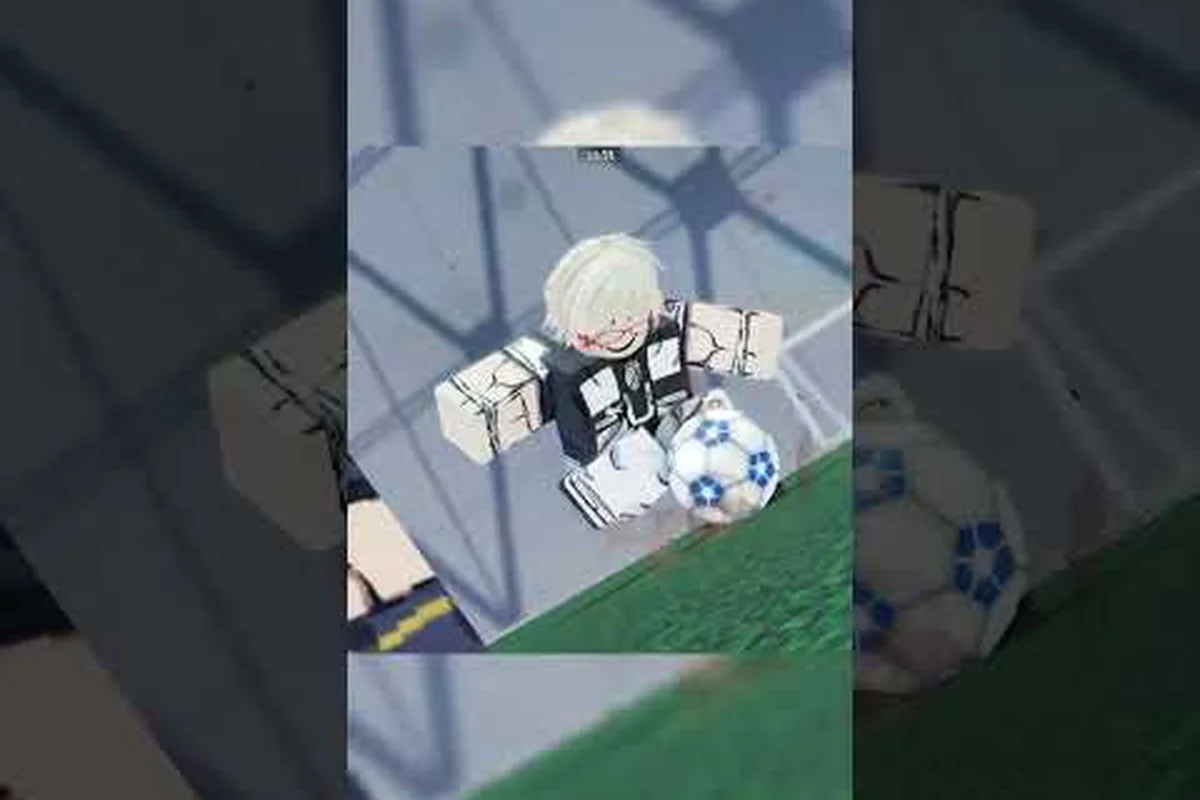
The Azure Latch update today is identified by the label the developer stamps on the experience page: the live build's title currently carries the [HITBOX CHANGES] prefix, and Roblox records the most recent experience update as 2026-10-18. The studio writes its newest patch theme straight into the title — earlier builds have shown tags such as [RIN] — so that prefix is the clearest public signal of what the current drop is about. The developer's own FAQ states the game ships roughly one update per month, and the numbered series this wiki can verify runs from Update 14 through 18.5.5. This page explains what is actually confirmed about the live build, walks the documented version history in order, and shows where the official log lives so you can verify any change yourself instead of trusting a summary.
What's in the Current Azure Latch Update Today
What is confirmed about the current build is narrower than the headline-hunting threads imply. The developer does not publish a numbered, itemised list of individual tweaks through a third-party outlet; the authoritative surface is the game's own Roblox page, its official Trello board, and its official Discord. The checkable facts are that the live title carries the [HITBOX CHANGES] prefix, that Roblox shows the experience was last updated on 2026-10-18, and that the developer describes a roughly monthly release rhythm. Exact timer values, cosmetic slot counts, or the number of line items inside a drop are not stated where this wiki can verify them, so they are not asserted here.
That restraint is not pedantry. Because hitbox behaviour shapes how every move connects, a build that advertises a hitbox pass is worth reading carefully. In a game where each Style owns five numbered skills, one T special and one Flow awakening that all run on cooldowns, geometry decides whether a tackle, a shot, or an interception actually lands. The safe assumption for a returning player is that the neutral game may feel different, and that the honest way to check is to play a few matches or read the board — not to trust a reshared changelog.
The monthly rhythm also shapes how you should plan. Whole-number releases such as Update 17 or Update 18 introduce a Style, a rework, or a mastery stage, while decimal patches tune what the wave before them introduced. If you have not queued since the previous drop, expect the current cycle to be about how moves connect rather than about a new roster addition, and check the live title prefix before you assume otherwise.
Reading the [HITBOX CHANGES] Prefix
The one thing the prefix tells you is the developer's current focus. Azure Latch has a habit of naming builds after their headline subject, and a hitbox-centred title points at the collision and reach behaviour of moves rather than at a new Style or a seasonal event.
| Signal | Status | Where it comes from |
|---|---|---|
Live title prefix [HITBOX CHANGES] | Confirmed | Roblox experience page |
| Most recent experience update 2026-10-18 | Confirmed | Roblox experience page |
| Roughly monthly release cadence | Confirmed | Developer FAQ |
| A per-item list of named tweaks with values | Not published | No authoritative source in this wiki's evidence set |
| A "Premier League" competitive scene run by the developer | Not supported | Circulates in community posts only |
Players who search specifically for a list of eight named changes should treat that framing carefully: the developer's published information does not enumerate a drop that way, and this wiki will not invent the list to match the search. What the prefix does support is the expectation that hitbox behaviour has been the focus of this cycle, and that hitbox-emphasis builds are the ones most likely to change how a given Style feels to play.
If you want to read the current drop for yourself, the sequence is short: note the title prefix and the last-updated date on the experience page, then open the official Trello board and read the most recent update cards. Anything that appears in neither place is community material, which can be useful context but is not a source for exact numbers.
Azure Latch Update Log: A Version-by-Version Walkthrough
The documented Azure Latch update log is short enough to memorise, and each numbered release has a single clear headline. The developer maintains the sequence on its official update cards, and the whole list is small: Update 14 through 18, the 18.1 to 18.5 decimal chain, and the 18.5.5 polish build. The cadence has stayed consistent at roughly one major drop per month, with the decimals landing in between.
| Version | Documented headline |
|---|---|
| Update 14 | Jin Kiyora joins the rollable roster |
| Update 15 | Tabito Karasu and Eita Otoya |
| Update 16 | Yukimiya Kenyu rework |
| Update 17 | Mastery Oliver Aiku and a mastery system overhaul |
| Update 18 | Mastery Michael Kaiser |
| Update 18.1 – 18.5 | Nagi and Kunigami strengthening wave; Chigiri's T special, Fast Lane |
| Update 18.5.5 | Chigiri Fast Lane follow-up, Nagi 1.5, Skill Builder changes, new MVP animation and emote |
Read as a story, the series shows the developer alternating between roster additions and system work. Updates 14 through 16 grew and refreshed the rollable pool. Update 17 rebuilt the mastery layer that quests feed into. Update 18 and its decimal patches pushed that layer out to more Styles, and the 18.1 to 18.5 stretch is the densest of them because it carries a deliberate strengthening wave for Nagi and Kunigami while Chigiri's Fast Lane special arrives.
How the Update Log Is Organized
The official Trello board is a large working document rather than a marketing page, so it is organised card-first: Styles, rarity bands, mechanics, codes, and update entries each live in their own area rather than in one chronological feed. For a player, the practical approach is to search the board for the Style or system you care about instead of reading it top to bottom.
Because the board is live, cards can change between visits. Treat any single reading of it as a snapshot, and prefer the dated update cards when you need to know what shipped and when. The same caution applies to the Roblox experience page: the title prefix changes with each cycle, so a prefix you memorised last month may no longer describe the build you are queueing into.
How Often New Patches Land
The developer's FAQ describes a roughly monthly cadence, and the documented series fits that pattern. Whole-number releases do the heavy lifting — a new Style, a rework, or a mastery stage — while decimal versions follow up with tuning. Off-months lean toward quality-of-life work and follow-up passes rather than headline additions.
The practical consequence is that the whole-number releases are the ones worth planning around. If a Style you main was reworked in Update 16, the 18.x decimal chain is where its numbers were most likely revisited. If you are budgeting for a new Style, the whole-number drops are where the roster actually changes, so it is worth checking the board before a spend rather than after.
For most players the useful habit is simply to check the live title prefix and the last-updated date once a week. It takes seconds, and it is far more reliable than relying on a saved summary of a build that has since been superseded.
Azure Latch Update History: The Major Milestones
The milestones inside the documented series are the ones that changed how the game is played rather than merely adding a name to the roster. Read together, they show the developer moving from filling out the rollable pool to building the long-term progression layer on top of it.
| Milestone | What it introduced | Long-term impact |
|---|---|---|
| Update 14 – 16 roster growth | Jin Kiyora, then Tabito Karasu and Eita Otoya, then the Yukimiya Kenyu rework | Broadened the Mythic band and showed the developer would rework a Style rather than only add one |
| Update 17 mastery overhaul | Mastery Oliver Aiku plus a rebuild of the mastery system | Turned mastery from a tag into a full progression track |
| Update 18 Mastery Kaiser | Mastery Michael Kaiser | Extended the mastery track to a World Class Style |
| Update 18.1 – 18.5 strengthening wave | Nagi and Kunigami strengthening, Chigiri's Fast Lane T special | A deliberate pass over existing Styles instead of new additions |
| Update 18.5.5 polish | Fast Lane follow-up, Nagi 1.5, Skill Builder changes, new MVP animation and emote | Ended the 18 cycle with tuning and tooling rather than a roster change |
The mastery overhaul in Update 17 is arguably the most consequential item, because it converted Style progression from a pure gacha pull into a quest-fed track. Later mastery stages build on the same framework, and the Skill Builder adjustments in 18.5.5 show the developer continuing to iterate on the tooling that surrounds it. The 18.1 to 18.5 wave matters for a different reason: it demonstrates that a Style can be strengthened without a new numbered release, which keeps the meta moving between the bigger drops.
Pre-Milestone Context
Azure Latch launched on 2024-12-20, and the numbered series this page can verify begins later, at Update 14. Between launch and that point the game was a smaller proposition: a ten-player server, a six-minute match, a short intermission, and a Style spin that most accounts were still working through. The developer's FAQ frames the current cadence as ongoing maintenance of that loop rather than a reboot of it.
Because the early build history is not documented in the same detail as the 14-to-18.5.5 series, this page does not attempt to reconstruct it. Anything that claims to describe pre-Update 14 balance in exact numbers is working from material this wiki cannot verify.
After the Milestones
The post-Update 17 period is where the progression layer became the main story. Mastery stages, the Skill Builder, and the strengthening wave all feed the same loop: play matches, earn Cash, convert it to Style Coins, improve the Styles you already own, and fill Flow during matches to trigger awakenings. The current hitbox-labelled build is a maintenance pass on top of that mature loop rather than a structural change.
The rhythm across the documented six months also shows a healthy mix of content and tuning. Every other drop shipped a roster or mastery addition, while the alternating drops focused on strengthening and bug work. That pattern is worth internalising if you plan your spending, because it tells you which months are likely to move the meta and which are likely to leave it alone.
Azure Latch New Update: What Just Dropped and What to Test First
If you want to feel a hitbox-focused build for yourself, test the interactions that geometry governs: tackles, interceptions, shots, and goalkeeper dives. These are the inputs where a change to reach or collision behaviour shows up first, and they are all reachable within a couple of matches.
-
Open the Roblox experience page and confirm the live title prefix still carries
[HITBOX CHANGES], so you know which build you are on -
Take a few M1 shots from range and watch whether the contact point against a charging goalkeeper feels consistent
-
Test Q tackles from an angle and watch whether the strip rolls away from the carrier rather than back onto their foot
-
Check Q with A or D held for the side dash, and the goalkeeper dive when you are in goal, to see whether the reach reads differently
-
Open the Skill Builder and confirm that a saved custom moveset still loads and plays
-
Watch the Flow meter while you play: tackles and interceptions are the fastest fill at +12%, successful dribbles add +10%, and a goal adds +15%
A 15-Minute Test Plan
Fifteen minutes is enough to sample the parts of the build that a hitbox pass would touch, without grinding a long session to find out. The point of the routine is to convert a vague sense that something feels different into a concrete list of what changed.
-
Queue one match and confirm the live title prefix before kickoff
-
Score or attempt one goal from open play and one from a set position, and compare how the shot contacts read
-
Attempt three Q tackles at an angle and note whether the ball is won cleanly
-
Spend two minutes in goal and test the Q dive on low and high attempts
-
Open the Skill Builder and load a custom moveset to confirm the tooling still works
-
Note your Flow gains across the match: +2% for catches and saves, +12% for tackles and interceptions, +10% for successful dribbles, +15% for a goal
The loop takes about fifteen minutes, covers the systems a hitbox pass touches most, and gives you a personal read on the build rather than a secondhand one. The documented series runs Update 14, 15, 16, 17, 18, 18.1 to 18.5 and 18.5.5, on a monthly cadence.
What This Means for Your Ranked Routine
For most players, a hitbox-focused build does not require a ranked routine change. What matters more is knowing how Ranked actually works: it unlocks at 500 goals or 250 saves, it feeds a Bronze-based ladder, and the developer does not publish a visible rating number for it. Season finishes hand out exclusive MVP animations and titles rather than currency, so the reward for a ladder push is cosmetic.
The honest answer to the common question about rating is that Azure Latch does not publish a rating-style number. What is confirmed is the unlock threshold, the existence of a Bronze-based ladder, a Rows leaderboard, guilds, and a community scrim scene. Any figure quoted for points gained or lost per match is not something the developer publishes, so treat it as a community estimate at best.
If your build relies on a particular tackle or shot angle, a hitbox pass is the moment to retest it rather than to change your whole plan. If it does not, you can treat the cycle as a normal month and keep working on the fundamentals: positioning, cooldown management, and filling Flow efficiently.
Azure Latch Patch Notes: How to Read Them Quickly
The Azure Latch patch notes do not live in one tidy third-party feed, so the fastest way to "read" a build is to go to the sources the developer controls and check what each one actually tells you. The experience page gives the theme and the date, the official Trello board gives the detailed cards, and the official Discord gives the running conversation.
| Source | What it gives you | How to use it |
|---|---|---|
| Roblox experience page | Current title prefix and last-updated date | First stop: confirms the theme and the date of the build |
| Official Trello board | Style roster, rarity bands, mechanics, codes, update cards | Search by Style or system for detail |
| Official Discord | Announcements and developer comments | Where the designer answers "why" questions |
| In-game experience | The build itself | The only place that settles whether a change feels right |
The practical reading habit is to check the experience page first, because the title prefix is the developer's own summary of the cycle, then move to the board when you need specifics about a Style or a system. Community videos can help you see a build in motion, but they are context, not evidence for an exact number.
What the Title Prefix Tells You
The consistent thing across the documented series is that the developer names a build after its headline subject. Update 14 through 16 are remembered for the Styles they added or reworked, Update 17 and 18 for the mastery stage they carried, and the current build is remembered for the hitbox pass its prefix advertises. That naming habit is itself the most reliable early signal of what a cycle is about.
It also means the prefix is the thing to check when a summary claims a different subject. If a post says the current build is a seasonal event drop but the live title still reads [HITBOX CHANGES], the post is describing something other than the live build. Checking the prefix takes a few seconds and prevents most confusion about what is actually live.
Azure Latch Update News: How the Dev Communicates Drops
The Azure Latch update news flow runs through the developer's own channels: the Roblox experience page, the official Trello board, and the official Discord. Each has a different strength, and reading all three is the only way to be sure of a claim. The experience page is the fastest summary because the title prefix changes with the cycle. The board carries the detailed cards. The Discord is where the developer explains intent around a drop.
| Channel | Strength | Best for |
|---|---|---|
| Roblox experience page | Title prefix and last-updated date | Confirming which build is live today |
| Official Trello board | Roster, rarity bands, mechanics, update cards | Detail on a specific Style or system |
| Official Discord | Announcements and developer replies | Understanding the reasoning behind a change |
| In-game experience | The live build | Settling whether a change actually matters to you |
For most players, the experience page plus the board is enough. The Discord is worth checking when a change touches a Style you main, because that is where the designer tends to answer follow-up questions. There is no separate official news site to monitor, so the three surfaces above are the whole list.
Following the Official Channels
The cleanest way to stay current is to follow the developer's official channels directly rather than a relay. Because community write-ups frequently paraphrase one another, a mistake or an invention can circulate for weeks before anyone checks it against the source, and the 18.x cycle produced plenty of examples.
If you watch community coverage as well, the useful discipline is to treat it as a preview of what to test rather than as a source of numbers. A video can show you what a build feels like in motion, but the roster, the rarity bands, the coin costs, and the update sequence all belong to the developer's own published material. Keeping that boundary in mind is what separates a reliable read of the game from a confidently wrong one.
Azure Latch When Is the Next Update: Reading the Cadence
If you are wondering about Azure Latch when is the next update, the honest answer is that there is no published date. The developer's FAQ describes a roughly monthly rhythm, and the most recent dated fact available to this wiki is the 2026-10-18 experience update. Everything beyond that — a specific window, a named seasonal event tied to a numbered drop — is not confirmed in the developer's published information, so it is not repeated here.
What the documented series does let you predict is the shape of the next patch rather than its date. Whole-number releases change the roster or the mastery layer; decimals tune what came before; the occasional triple-decimal build, like 18.5.5, is polish that carries a new MVP animation or emote alongside fixes. The longer version-by-version history behind this cadence sits in the Azure Latch release cadence explainer.
| Patch type | How it appears in the series | Typical content |
|---|---|---|
| Whole number (14 – 18) | Major drop | New Style, rework, or mastery stage |
| Decimal (.1 – .5) | Follow-up | Strengthening waves and tuning |
| Triple decimal (18.5.5) | Polish | Bug work, Skill Builder changes, MVP and emote additions |
So the practical answer to "when is the next update" is: soon, if the monthly rhythm holds, but check the experience page's last-updated stamp rather than counting down to an unconfirmed date. The prefix on the title will tell you the subject the moment it changes.
How to Prepare for the Next Drop
Preparation is mostly about currency discipline. A single Style roll costs 250 Style Coins, duplicates refund roughly a tenth of that, and Cash converts to Style Coins at 5:1. A Lucky Spin costs 150 Robux or 15,000 Style Coins, and the shop publishes its odds per band: World 1%, Mythic 10%, Legendary 25%, Epic 64%, and Common 0% for that particular spin. Spin Pity exists and does not stack with a Luck boost.
| Currency fact | Value |
|---|---|
| Style roll cost | 250 Style Coins |
| Duplicate refund | Roughly one tenth |
| Cash to Style Coins | 5:1 |
| Cash per win / goal / assist / steal / ankle break | 100 / 50 / 30 / 20 / 20 |
| Lucky Spin cost | 150 Robux or 15,000 Style Coins |
| Published Spin odds | World 1% / Mythic 10% / Legendary 25% / Epic 64% / Common 0% |
The disciplined play before any drop is to bank Style Coins and Cash rather than spend them as they arrive, because a roster change is the moment a new Style becomes worth chasing and a mastery stage is the moment an owned Style becomes worth developing. Neither requires premium currency, which is why the patient approach works. If you are climbing the ladder rather than collecting, use the window to work on the fundamentals instead: cooldown management, positioning, and filling Flow through tackles and goals.
What a Hitbox-Focused Build Means for Style Choice
A build whose title advertises hitbox changes is a reminder that Azure Latch is judged on how moves connect, not only on what is in the roll pool. Two Styles can sit in the same rarity band and play completely differently because one relies on long-range shots and the other on close tackles, and a change to reach or collision behaviour can move the effective balance between them without touching any advertised number.
| Consideration | Why it matters |
|---|---|
| Rarity band | Roll odds are published per band, but a higher band does not guarantee a role fit |
| Position | A Common keeper Style can still be the right pick for a given match |
| Mode | 6v6, 11v11, Ranked, and Legacy reward different spacing and different risk |
| Cooldown economy | Five numbered skills, one T special, and one Flow awakening all share cooldowns |
| Flow gain | Tackles and interceptions fill the meter fastest at +12%, then dribbles at +10%, then goals at +15% |
The safe way to think about a hitbox cycle is that it can shift the feel of existing Styles without adding a name to the roster. The rollable pool is unchanged by it: World Class still holds Michael Kaiser, Itoshi Rin, Don Lorenzo, and Mikage Reo; Mythic still holds Tabito Karasu, Eita Otoya, Jin Kiyora, Itoshi Sae, Oliver Aiku, Barou Shoei, Yukimiya Kenyu, and Kunigami Rensuke; Legendary still holds Kurona Ranze; Epic still holds Shidou Ryusei, Bachira Meguru, Nagi Seishiro, and Chigiri Hyoma; and Common still holds Isagi Yoichi and Gagamaru Gin.
So the practical response to a hitbox-labelled build is to retest the specific interactions your Style depends on, then get back to the fundamentals. If you play a tackling Style, spend a session on Q timing from angles. If you play a shooting Style, spend one on shot contact and positioning before you fire. If you play goalkeeper, spend one on the Q dive and the release of the ball after a save. None of that requires knowing the exact numbers behind the build, and all of it is more useful than a rumoured change list.
Frequently Asked Questions
What is the current Azure Latch update today?
The most recent experience update on record is dated 2026-10-18, and the live experience title carries the [HITBOX CHANGES] prefix, which is how the developer signals the theme of the current cycle. The developer does not publish an itemised third-party list of named tweaks, so the confirmed facts are the prefix and the date rather than a numbered change log.
Where can I find the official Azure Latch update log?
The developer's official Trello board is the largest authoritative log, carrying the Style roster, rarity bands, mechanics, codes, and the update cards. The Roblox experience page adds the current title prefix and the last-updated date, and the official Discord carries announcements and developer replies. Those three surfaces are the whole official list.
What was the biggest Azure Latch update in the past year?
Judged by long-term impact, the Update 17 mastery overhaul stands out, because it rebuilt mastery into a proper progression track and shipped Mastery Oliver Aiku alongside it. Update 18 then extended that track with Mastery Michael Kaiser, and the 18.1 to 18.5 wave strengthened Nagi and Kunigami and added Chigiri's Fast Lane T special before 18.5.5 closed the cycle with Skill Builder changes and a new MVP animation and emote.
When is the next Azure Latch update expected?
There is no published date. The developer's FAQ describes a roughly monthly cadence, and the documented series fits that pattern, but this wiki will not put a date on a drop the developer has not announced. Check the last-updated stamp on the experience page and watch for the title prefix to change.
How should I spend my resources before the next update?
Bank Style Coins and Cash rather than spending them on arrival. A Style roll costs 250 Style Coins, duplicates refund roughly a tenth, and Cash converts at 5:1, so a patient player can afford a new Style after a roster change without buying currency. If you are pushing the ladder instead, spend the window on fundamentals — cooldown management, positioning, and filling Flow through tackles and goals — rather than on speculation about the next drop.